
Why Your Phone Is the Weakest Link in an Emergency
In the seconds that matter most, your phone is often out of reach, locked, or gone. Here's why it fails in an emergency, and what phone-free safety actually looks like.
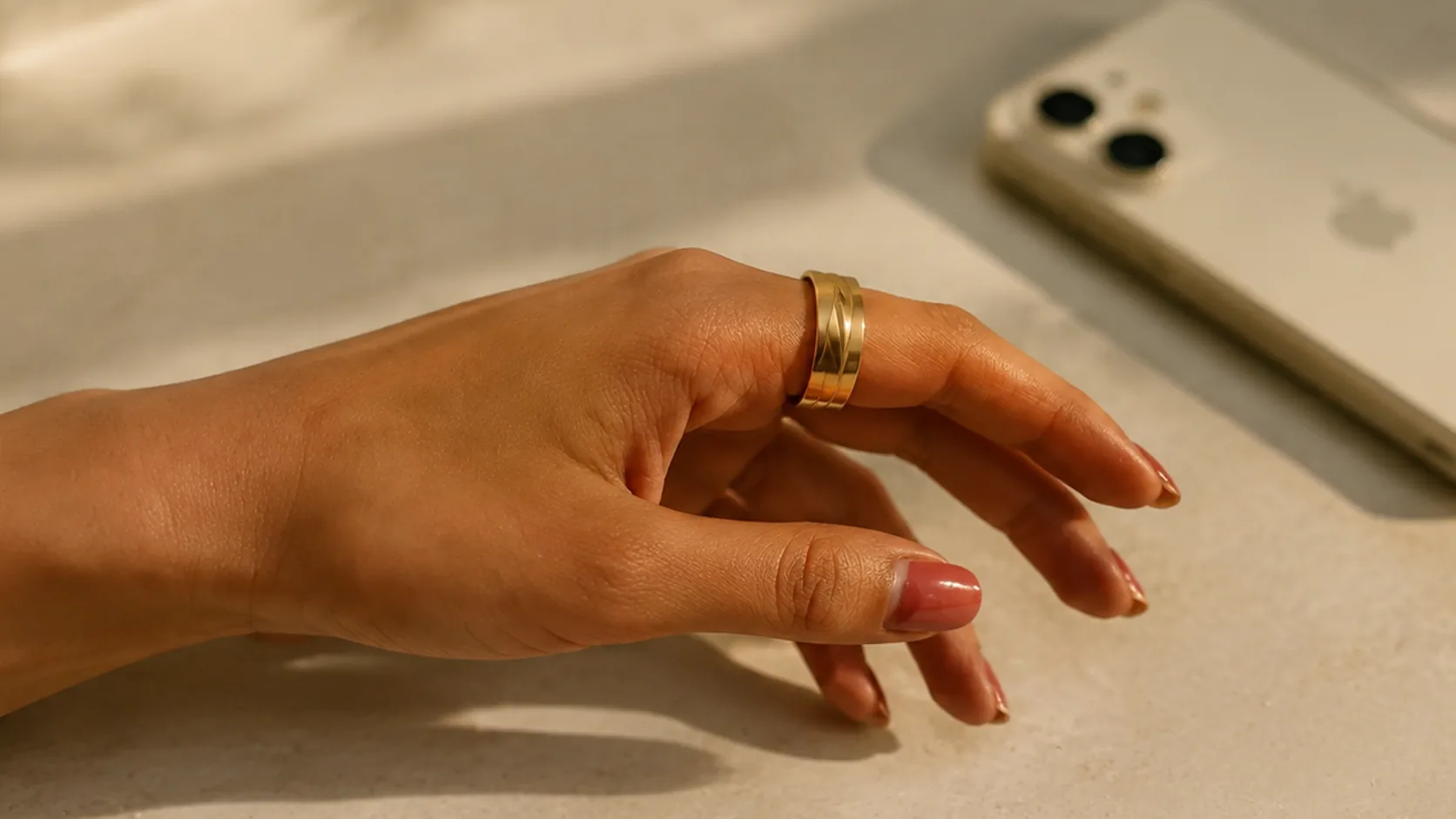
Most of us were taught that the phone is the safety plan. Keep it charged, keep it close, call someone if anything feels wrong. It's good advice, right up until the moment it isn't.
In the few seconds when something actually feels off, the phone asks a lot of you. Find it, unlock it, open the right thing, explain where you are. That's a long list for a moment that gives you almost none. Here's why the tool most of us rely on was never built for this, explained plainly.
Why does your phone fail in an emergency?
Your phone fails in an emergency because it depends on conditions that rarely hold in one: that it's already in your hand, that you can unlock it, that you have time to open an app and explain, and that no one takes it from you. Remove any single one of these and the phone stops being a safety tool. In a real emergency your attention narrows and your hands get busy, which is the exact moment a phone expects you to stay calm and start typing.
The four assumptions a phone makes
1. It assumes you can reach it
Most of the time the phone is in a bag or a back pocket. Reaching for it takes your hands and eyes off what's in front of you, which is the last thing you want in the moment you need help most.
2. It assumes you can unlock it
A locked phone is a wall between you and help. Cold hands, a cracked screen, a face the camera can't read in the dark, a passcode you have to type without looking. Each one adds seconds you don't have.
3. It assumes you have time to explain
Even unlocked, the phone wants information. Which app, which contact, and then the hardest part, telling a stranger where you are while your mind is elsewhere. Calling for help isn't one action, it's a sequence, and sequences fall apart under stress.
4. It assumes no one takes it from you
This is the one we talk about least. In many Indian cities the phone isn't just your link to help, it's the thing being targeted. Snatching at signals, on the street, and from autos and e-rickshaws is a documented and rising pattern, and a snatched phone takes your only safety tool with it.
How much time do you actually have?
Most personal emergencies escalate in seconds, while help is measured in minutes. That gap is the real problem, and it's why the first alert matters far more than the eventual response. The useful question isn't how fast the police arrive, it's how fast someone who cares about you knows something is wrong, and how little you had to do to make that happen. If raising the alarm takes six or seven small steps, the honest answer is that for most people, most of the time, it doesn't happen at all.
Wearable panic button vs phone
A body-worn wearable isn't better because the phone is bad. The phone is a remarkable device carrying a job it was never built for. A wearable is built for that one job, and the difference shows up in the moments that count.
| In an emergency, can it… | Phone | Body-worn wearable |
|---|---|---|
| Be used without searching for it | Rarely, it's usually stowed | Yes, it's on your hand |
| Work without unlocking | No | Yes |
| Automatic triggers | No | Yes |
| Work without looking at it | No | Yes |
| Stay with you if someone grabs at you | Not reliably | Worn, harder to take |
| Raise the alarm quietly | Not easily | Yes |
One honest caveat: a wearable isn't magic. It still needs charge and a connection to send help. The advantage isn't that it removes every step, it's that it removes the steps that fail first, reaching, unlocking, and explaining.
What phone-free safety actually looks like
Phone-free safety means the alarm lives on your body, not in an app. One press, or an automatic trigger, sends the people who matter your location and the fact that you need them, without you finding a device, unlocking it, or narrating where you are. This is the thinking behind Wualt: a ring you already wear, a single discreet action, and help set in motion before you've said a word. The phone becomes the backup, not the front line.
A quick way to judge any safety tool
- Can you use it without looking for it
- Does it work without unlocking anything
- Can you trigger it in one action, under stress
- Does it still work if your phone is taken or out of reach
- Can it act on its own if you can't
- Does it ask anything of you on an ordinary day
Anything that can't clear most of this list is a backup, not a plan.
FAQs
Can't I just use the SOS shortcut on my phone? It's better than nothing and worth setting up, but it still assumes the phone is on you and that you can complete a few presses under pressure. It shrinks the steps, it doesn't remove the ones that fail first.
Isn't a wearable just one more thing to charge? A ring isn't an extra thing you carry, it's something you already wear all day and often all night. It asks for an occasional charge and nothing else, which is close to the opposite of the constant low-level effort a phone-based plan demands.
What if I can't press anything at all? That's why automatic triggers matter. The most useful safety tools don't rely only on a deliberate press, they can also sense when something is wrong and act on their own.
Does it work if I don't have my phone nearby? Sending help needs a connection somewhere in the chain, which is the honest limit of every connected device today. A good safety wearable is designed to lean on that connection as lightly as possible.
Your phone is a brilliant device that's quietly been asked to do a job it was never designed for, and noticing that isn't a reason to feel less safe, it's a reason to expect better tools.
Wualt is being built for exactly these seconds: safety you wear, that acts the moment you need it, and stays quiet the rest of the time. Pre-order Wualt


